

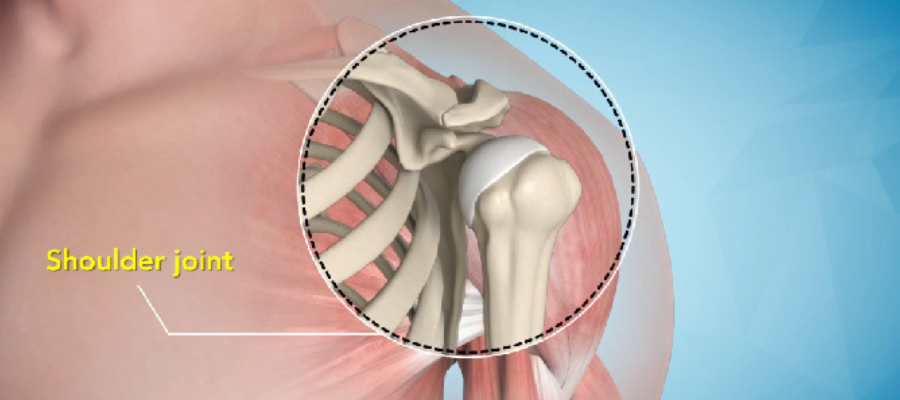
What is Shoulder Joint Replacement?
Although shoulder joint replacement is less common than knee or hip replacement, it is just as successful in relieving joint pain. Joint replacement surgery is a safe and effective procedure to relieve pain and help you resume everyday activities. Over the years, shoulder joint replacement has come to be used for many other painful conditions of the shoulder, such as different forms of arthritis.
In shoulder replacement surgery, the damaged parts of the shoulder are removed and replaced with artificial components, called a prosthesis. The treatment options are either replacement of just the head of the humerus bone (ball), or replacement of both the ball and the socket (glenoid).
Causes
Several conditions can cause shoulder pain and disability, and lead patients to consider shoulder joint replacement surgery.
1) Osteoarthritis (Degenerative Joint Disease)- This is an age-related “wear and tear” type of arthritis. It usually occurs in people 50 years of age and older, but may occur in younger people, too. Over time, the shoulder joint slowly becomes stiff and painful.
2) Rheumatoid Arthritis- This is a disease in which the synovial membrane that surrounds the joint becomes inflamed and thickened. This chronic inflammation can damage the cartilage and eventually cause cartilage loss, pain, and stiffness.
3) Post-traumatic Arthritis- This can follow a serious shoulder injury. Fractures of the bones that make up the shoulder or tears of the shoulder tendons or ligaments may damage the articular cartilage over time. This causes shoulder pain and limits shoulder function.
4) Rotator Cuff Tear Arthropathy- A patient with a very large, long-standing rotator cuff tear may develop cuff tear arthropathy.
5) Severe Fractures- A severe fracture of the shoulder is another common reason people have shoulder replacements. When the head of the upper arm bone is shattered, it may be very difficult for a doctor to put the pieces of bone back in place.
Treatment Options
There are different types of shoulder replacements. Your surgeon will evaluate your situation carefully before making any decisions.
1) Total Shoulder Replacement- The typical total shoulder replacement involves replacing the arthritic joint surfaces with a highly polished metal ball attached to a stem, and a plastic socket.
2) Stemmed Hemiarthroplasty- Depending on the condition of your shoulder, your surgeon may replace only the ball. This procedure is called a hemiarthroplasty. In a traditional hemiarthroplasty, the head of the humerus is replaced with a metal ball and stem, similar to the component used in a total shoulder replacement. This is called a stemmed hemiarthroplasty.
3) Resurfacing Hemiarthroplasty- Resurfacing hemiarthroplasty involves replacing just the joint surface of the humeral head with a cap-like prosthesis without a stem.
4) Reverse Total Shoulder Replacement- In reverse total shoulder replacement, the socket and metal ball are switched. This allows the patient to use the deltoid muscle instead of the torn rotator cuff to lift the arm.
Recovery
After surgery, you will feel some pain. This is a natural part of the healing process. Most patients are able to eat solid food and get out of bed the day after surgery. Physical therapy will begin soon after surgery, and when you feel less pain, you can start moving sooner and get your strength back more quickly.
A careful, well-planned rehabilitation program is critical to the success of a shoulder replacement. Your surgeon or physical therapist will provide you with a home exercise program to strengthen your shoulder and improve flexibility.
Common FAQs
Shoulder joint replacement is usually recommended when severe shoulder pain and stiffness do not improve with medicines, injections, or physiotherapy. It is commonly advised in advanced arthritis, severe joint damage, or complex shoulder fractures.
Initial recovery usually takes 4–6 weeks, while full recovery with strength and movement may take 3–6 months depending on rehabilitation and patient health condition.
Yes, it is generally a safe and well-established procedure when performed by an experienced orthopedic surgeon. Like any surgery, small risks like infection, stiffness, or implant issues may occur but are uncommon.
Yes, physiotherapy is very important after surgery. It helps restore shoulder movement, improves muscle strength, and ensures better long-term results.
Most modern shoulder replacement implants can last 15–20 years or longer, depending on activity level, implant quality, and post-surgery care.